Ask five owners of a pre-1950 home in Royal Oak whether they live in a historic district, and most will say yes, pointing to the age of the house or the character of the street. Ask the city, and the answer is almost always no.
Royal Oak currently has 15 legally designated historic districts. That sounds like a lot of regulated ground until you look at what those districts actually protect. Several cover a single downtown building. One covers eleven houses on one stretch of North Altadena Avenue. Another, adopted in 2024, protects four cement bridges and a strip of median grass, not a single house nearby. The line the city actually enforces almost never matches the neighborhoods residents and listing copy call historic, and that gap matters the moment someone tries to replace a roof, add a dormer, or list a house as a preservation selling point.
What "Historic District" Actually Means Here
A historic district in Royal Oak is not a vibe. It is a specific, mapped set of parcels codified into the municipal code, and a property cannot be added to one without the owner's permission. Once a resource sits inside a designated district, the rule is narrow but firm: interior work that does not touch the exterior needs no review at all, but any change to the outside of the structure does.
That means a full kitchen gut, a finished basement, or new interior wiring can move forward on a normal permit. The moment work touches siding, roofline, windows, or anything visible from the street, the process changes. The property owner takes the request and any contracts to the Building Department, which contacts the chair of the Historic District Commission. The chair convenes the commission, sets a review date, and the department notifies the owner and their contractor to attend. The commission then votes to issue a Certificate of Appropriateness or a written rejection. Anyone unhappy with that decision has 60 days to appeal to the State Historic Preservation Office, with a further appeal available to Oakland County Circuit Court.
None of that applies to a house that simply looks old. It only applies to a parcel that is on the list.
Fifteen Districts, and Most of Them Are Tiny
Royal Oak's designated districts skew heavily toward single structures in the downtown core rather than residential blocks. The Royal Oak Savings Bank Block at Fourth and Main, the Hilzinger Block Building, the B&C Grocery Store, the Royal Oak Woman's Club, the McDowall House, the Orson Starr House, the Stauch House, Hermann's Bakery, the Baldwin Theatre, the Knowles House, and the Fleming Goodrich House are each their own individual district, one address at a time.
Only two districts touch anything resembling a neighborhood, and both are narrower than their names suggest:
- The L.A. Young Historic District covers 11 specific homes on North Altadena Avenue, not the surrounding street grid.
- The Vinsetta Bridges Historic District, adopted in 2024, covers the boulevard median from the Lawndale turnaround to the turnaround before 12 Mile Road, plus four one-lane cement bridges at Mayfield, Greenleaf, Woodsboro, and Cedar Hill. All of it is city-owned infrastructure. None of it is a house.
Vinsetta Park's Reputation vs. Vinsetta's Regulation
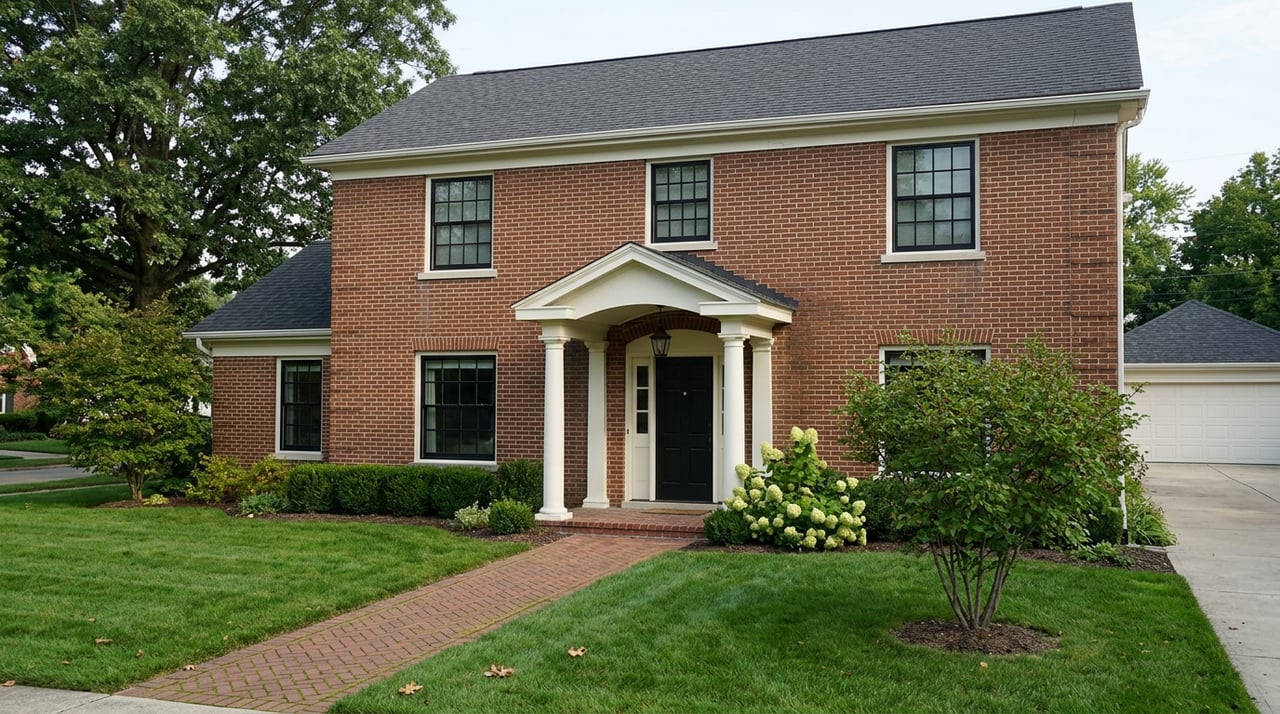
Vinsetta Park is probably the clearest example of the gap. The neighborhood has a real architectural identity, with Colonial Revival, Tudor Revival, Dutch Colonial, Arts and Crafts, and American Foursquare homes lining a winding boulevard that follows the buried path of the old Red Run waterway. It is the kind of street that reads as historic the moment you turn onto it.
But when the city commission voted in early 2024 to designate the Vinsetta Bridges Historic District, the debate on the record was entirely about the bridges and the median, not the homes. Commissioners Brandon Kolo and Melanie Macey pushed back on why this particular stretch of green space deserved protection over any other green space in the city. Patrick Andras of the Royal Oak Historical Commission argued the median traced back to the original 1916 subdivision plat, a deliberate break from Detroit's street grid meant to capture what he called "the feeling of the '20s." The commission agreed, and the designation passed. It applies to the bridges and the median. It does not apply to a single home along Vinsetta Boulevard.
That distinction has real consequences for a homeowner. Someone whose Tudor Revival sits along Vinsetta can reroof, replace windows, or add a dormer without ever filing for a Certificate of Appropriateness, because the house itself carries no designation. The character that makes the street desirable is real. The regulatory protection most people assume comes with it is not there.
| What sounds historic | What is actually regulated |
|---|---|
| Vinsetta Park's homes and streetscape | Only the boulevard median and the four named bridges |
| North Altadena Avenue broadly | 11 specific houses under the L.A. Young designation |
| Vintage downtown storefronts generally | Individually listed single buildings, one address per district |
The Consequences Run Both Directions
For a house that is genuinely inside one of these districts, the obligations are real and they cut against neglect as much as against unapproved renovation. If the commission finds that a resource is deteriorating through what the ordinance calls demolition by neglect, it can require the owner to make repairs. If the owner does not comply, the city can obtain a court order, enter the property, complete the repairs itself, and charge the cost back to the owner as a special assessment. A seller inside one of these districts cannot let a deteriorating exterior sit and call it a future buyer's problem indefinitely. The city has a mechanism to force the issue.
It is also worth knowing what a historic designation does not buy you in Royal Oak right now. Michigan discontinued its state tax incentive program for historic properties, so the designation carries no automatic tax credit here, though the city notes that could change if the state reinstates the program. And the city's RENO fee waiver program, which reduces permit and inspection fees for qualifying residential projects, is explicit that it does not replace other required approvals. If your address sits inside a designated district, RENO can waive city fees, but it does not waive the Historic District Commission's review. You still need the Certificate of Appropriateness before the permit moves forward.
What This Means If You're Buying or Selling
If you are looking at an older home anywhere in Royal Oak, whether it is a bungalow in Vinsetta Park or a foursquare a few blocks from downtown, the character of the street tells you almost nothing about whether the address is regulated. The only way to know is to check the specific parcel against the city's current list of designated properties before you assume a future roof, addition, or window replacement will need commission sign-off. For most old homes in this city, it will not.
If you are selling, the opposite caution applies. Calling a listing "historic" when the parcel carries no designation is inaccurate and can set a buyer up for confusion later. If your home genuinely sits inside one of the 15 districts, say so plainly and explain what that means in practice: interior renovations proceed normally, exterior work requires a hearing and a certificate first, and the city has real enforcement power if exterior maintenance is deferred too long. Buyers who know that upfront can budget the extra weeks a review adds. Buyers who find out mid-permit rarely feel good about it.
Does living near Vinsetta Boulevard mean my home is restricted? Not unless your specific parcel is separately listed as a designated resource. The 2024 designation protects the median and the four bridges, not the adjacent houses.
Can I still remodel a kitchen or refinish a basement in a historic district home? Yes. Interior work that does not affect the exterior's integrity does not require Historic District Commission review at all.
Where do I check if a specific address is actually on the list? The city maintains a public page of designated historic districts and their study reports, and that is the only reliable way to confirm status before you plan a project or write a description for a listing.
Royal Oak's old neighborhoods earn their reputation honestly. The regulation protecting a small slice of that reputation is narrower, older, and more specific than most people assume. If you are weighing a purchase, a renovation, or a listing description on a vintage Royal Oak home, Kim Nagy and the Nagy Real Estate Group can help you check the actual parcel status before you plan around an assumption. Contact Us.